
Loading...
Serving Daytona Beach, FL and surrounding areas. (386) 278-1903
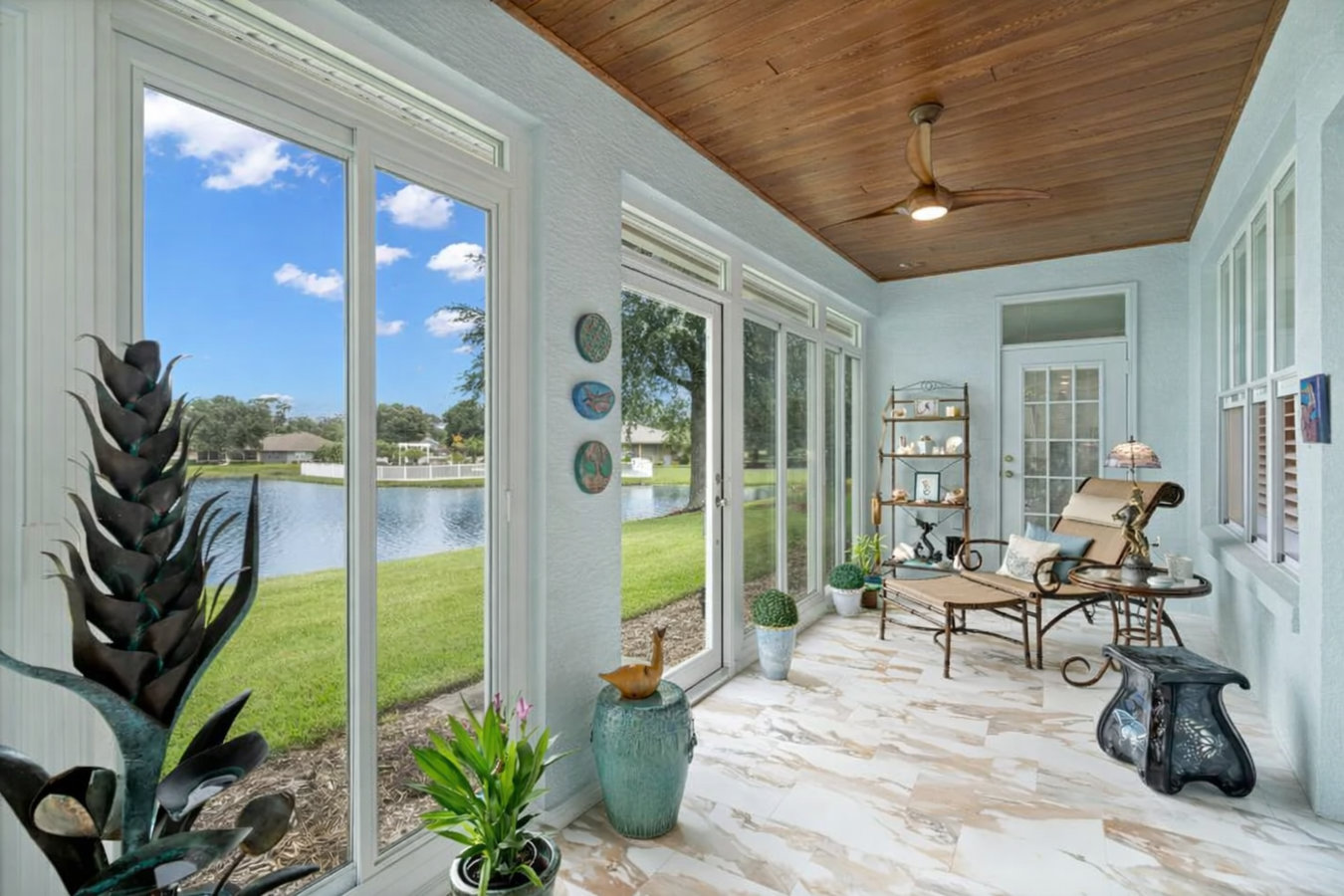
TrueView Daytona Beach Sunrooms builds all season rooms, sunroom additions, screen enclosures, and enclosed patio rooms for Sanford homeowners - from the historic concrete block neighborhoods near Lake Monroe to the newer subdivisions along Lake Mary Boulevard, with every project permitted through the Seminole County Building Division and built to Florida Building Code wind-load standards.
Sanford homeowners near Lake Monroe and the St. Johns River corridor deal with year-round humidity that makes uninsulated outdoor structures uncomfortable for much of the year. A fully insulated all season room tied into your existing HVAC system gives you a comfortable space in both the humid August heat and the cooler January mornings when Sanford temperatures occasionally drop toward freezing - without adding a separate heating or cooling unit.
Sanford's housing mix ranges from modest bungalows in the historic downtown districts to larger concrete block homes in newer subdivisions, and many of these properties have rear yards with room to expand. A permitted sunroom addition adds livable square footage to the home's footprint and shows up in the appraised value - useful for Sanford homeowners who are building equity in a city where property values have grown steadily over the past decade.
Sanford's proximity to Lake Monroe and the St. Johns River means mosquito pressure stays high from late spring through early fall. A properly built screen room with a sealed base track and a roofed overhead structure keeps insects out and lets you use your patio through most of the year - including the long, warm evenings in September and October when the worst of summer heat has passed but outdoor conditions are still pleasant.
Many Sanford homes - particularly the concrete block ranches built in the 1960s through the 1980s - have rear patios that sit open to the weather or are covered by aging aluminum structures. Enclosing the patio with solid walls, a properly pitched roof, and sealed windows turns that underused space into a room that stays dry through Sanford's summer storms and adds real square footage without the cost of a full addition.
Sanford's position in Central Florida - roughly 25 miles inland from the coast - means it sees a wider temperature range than oceanside communities, with occasional winter mornings cold enough to make an uninsulated room uncomfortable. A four season sunroom with thermal glass and insulated framing stays comfortable through the full calendar year, giving Sanford families a gathering space that works in every season rather than just the brief dry months when outdoor conditions are ideal.
Sanford gets over 50 inches of rain per year, most of it in heavy afternoon storms from June through September, and open patios take the full force of that water. A covered patio enclosure protects the existing concrete slab, stops rain from pooling against the rear wall of the house, and provides a dry, sheltered area during the long Florida storm season - turning what is currently an unusable wet-weather liability into functional outdoor living space.
Sanford's housing stock spans more than a century, and that range creates real differences in how sunroom and enclosure work gets done across the city. The historic residential neighborhoods near downtown - streets built between the 1890s and the 1950s - often have wood-frame or early concrete block construction, older foundation systems, and proximity to Lake Monroe that keeps ground moisture elevated. Homes in these areas need contractors who know how to work with older materials and understand the moisture dynamics that come with being close to the water. The newer subdivisions on the western and southern edges of the city are standard Florida concrete block and stucco builds from the 1990s and 2000s, with their own set of common issues including stucco cracking around window penetrations and drainage that doesn't always handle Sanford's intense summer rainfall.
Sanford averages over 50 inches of rain per year, with the bulk of it arriving in heavy afternoon thunderstorms from June through September. That volume of water puts stress on outdoor structures - screen rooms, covered patios, and patio enclosures all take repeated impact from driven rain during storm season. Florida Building Code wind-load requirements apply to all permitted additions in Sanford, and the Seminole County Building Division handles permitting for residential projects in the city. Working with a contractor who understands both the local building review process and the specific demands of Sanford's climate means fewer surprises and a finished project that holds up through many storm seasons.
Our crew works throughout Sanford regularly, and we understand the local conditions that affect sunroom contractor work here. Sanford is Seminole County's county seat, which means permits for residential additions are processed through the Seminole County Building Division - a process we know well and navigate on every Sanford project. The city's mix of historic downtown homes and newer suburban subdivisions means our crew encounters both older concrete block and wood-frame construction and standard 1990s-era CBS builds in the same work week, and we approach each one based on what the specific structure and neighborhood actually require.
Sanford's most recognizable features are its waterfront and its historic downtown, centered on First Street and the marina along Lake Monroe. The neighborhoods closest to the lake and the St. Johns River corridor deal with higher ambient humidity and soil moisture than the subdivisions further inland - a real difference in how outdoor structures age and how waterproofing and drainage need to be handled on those properties. Driving through the city on US-17-92 past Orlando Sanford International Airport and the Central Florida Zoo gives a good sense of how wide the service area is - from the older neighborhoods near downtown to the newer streets on the western edge.
We also serve Deltona just south of Sanford along Interstate 4, as well as DeLand to the west - both communities with their own distinct housing stock and permitting requirements that our crew knows from regular project work in each area.
Call us or fill out the online form and we respond within one business day. We ask a few questions about the project location, the existing structure, and what you want to build so we come prepared to the site visit.
We visit your Sanford property, assess the existing structure and site conditions, and walk through what the project involves. You receive a fixed written estimate covering all materials, labor, and permit fees - no surprises once work starts.
We submit the permit application to the Seminole County Building Division and order materials during the review window. Most Sanford permits take two to four weeks - we use that time so construction can start without additional delay once approval comes through.
Construction for most Sanford sunroom additions and screen rooms takes one to four weeks depending on scope. We coordinate required county inspections throughout the build and hand over the completed permit documentation when the project closes out.
We serve Sanford homeowners across Seminole County - from the historic neighborhoods near Lake Monroe to the newer subdivisions off Lake Mary Boulevard. Contact us for a free on-site estimate with no pressure and no obligation.
(386) 278-1903Sanford is the county seat of Seminole County, situated on the southern shore of Lake Monroe where the St. Johns River widens before continuing north. The city had a population of about 61,000 as of the 2020 Census and has grown steadily, with newer development pushing out toward the western and southern edges while the historic core near downtown remains intact. That historic core - centered on First Street and the marina - is listed on the National Register of Historic Places and includes blocks of late 1800s and early 1900s commercial and residential buildings. The neighborhoods closest to downtown contain many homes built between the 1890s and the 1950s - wood-frame and early concrete block construction with older foundation systems that require more careful attention during any structural work than a standard Florida CBS home from the 1990s.
The newer subdivisions on Sanford's western and southern edges - areas that developed from the 1990s through the 2010s along corridors like Lake Mary Boulevard and the State Road 417 interchange - are standard single-family concrete block and stucco construction on modest lots. These neighborhoods house many of the families who work at Orlando Sanford International Airport, in the Seminole County healthcare and education sectors, or who commute south to Orlando. Nearby Deltona shares a similar CBS-dominant housing stock from a slightly earlier era, while DeLand to the west has its own historic downtown character and a more rural surrounding landscape - two different communities, each with homeowners who call us for sunroom work on a regular basis.
Sanford homeowners trust TrueView Daytona Beach Sunrooms for all season rooms, screen enclosures, and sunroom additions. Call us today or request a free estimate - we respond within one business day.