
Loading...
Serving Daytona Beach, FL and surrounding areas. (386) 278-1903
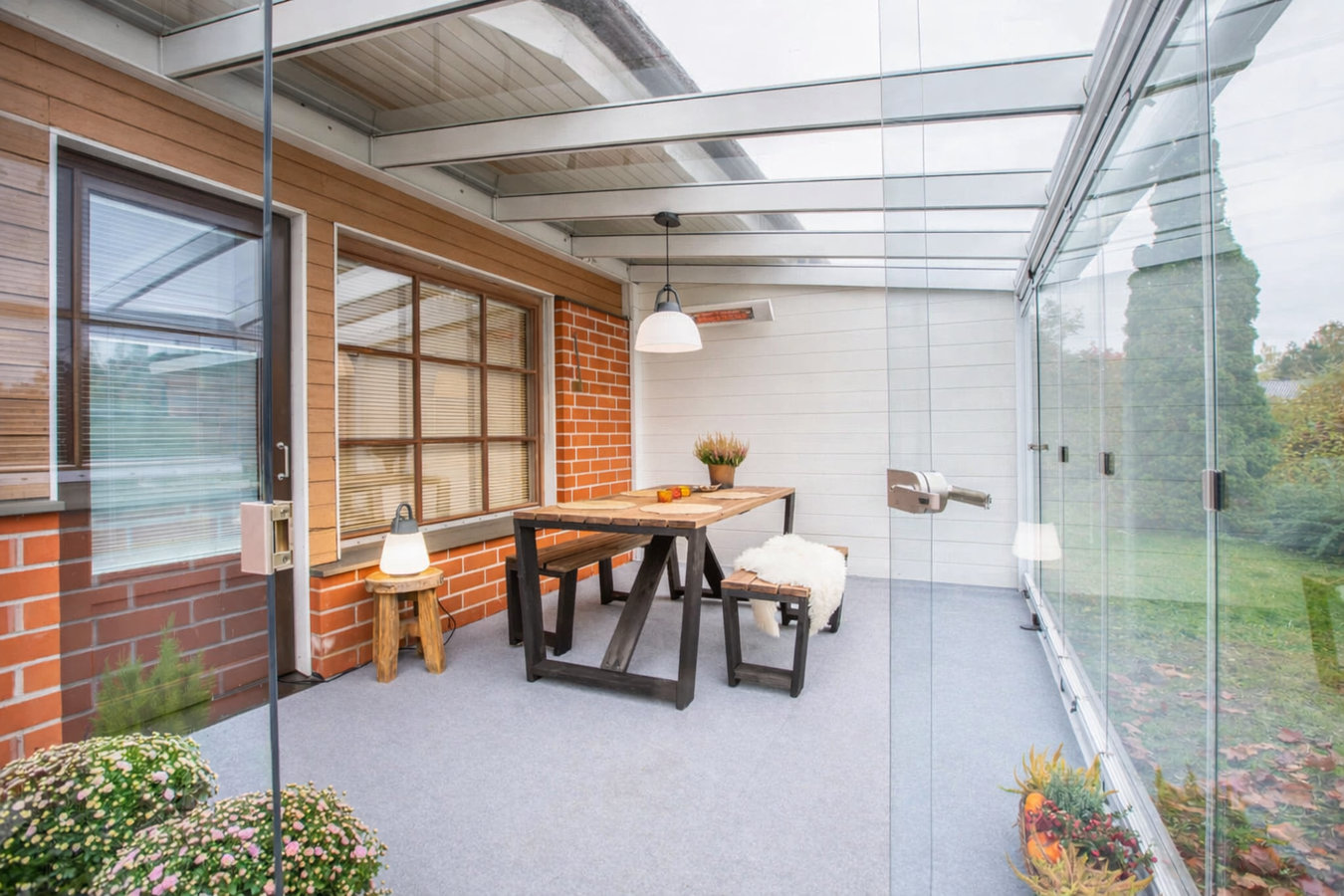
Your open patio sits empty most of the year because of heat, bugs, and afternoon storms. An enclosed patio room turns that wasted space into a comfortable, weatherproof room you can actually sit in - morning coffee in August, family dinners in December.
Enclosed patio rooms in Daytona Beach are permanent additions built onto the back or side of your home that turn an open outdoor space into a livable, weather-protected room. They typically have a solid roof, impact-rated windows that open and close, and a floor that connects to your existing slab. Most projects take one to three weeks of active construction after permits are in hand, and they use your existing patio footprint - so you are not breaking ground on new foundation work.
If you want the outdoor feeling without the outdoor misery, an enclosed patio room is often the most cost-effective way to get there. It is more practical than a basic solarium installation for everyday living, and it is a solid step up from the open-air patio that sits empty from June through September. Many Daytona Beach homeowners use these rooms as home offices, hobby spaces, or casual guest areas.
The key difference between an enclosed patio room and a full patio enclosure is the level of weather protection and finish. An enclosed patio room is a committed, permanent structure - not a screen kit or a prefabricated frame that you assemble on a weekend.
If your back patio sits empty most of the year because it is too hot, too buggy, or too exposed to afternoon storms, that is the clearest sign an enclosed room would change how you live in your home. Daytona Beach summer heat and daily thunderstorms make open patios uncomfortable for five or six months of the year - an enclosed room solves all three problems at once.
Many Daytona Beach homes have older aluminum-framed screen enclosures that have been repaired multiple times - torn screens, bent frames, or a roof that leaks when it rains hard. If you are spending money on repairs every season and still not satisfied, converting to a fully enclosed room is often a smarter long-term investment than another patch job.
If you need more usable space but a full room addition feels too expensive or disruptive, an enclosed patio room is often the most cost-effective path. It uses your existing footprint - the patio slab is already there - so you are not breaking ground on new foundation work. Home offices, art studios, and guest sleeping areas are common uses.
If you see water stains, soft flooring, or mold near the door leading from your house to your patio, your current setup is not keeping moisture out effectively. Daytona Beach rain and humidity accelerate this kind of damage, and it tends to get worse over time. An enclosed room creates a proper weather barrier that can stop the moisture problem at its source.
We build enclosed patio rooms using impact-rated windows, insulated roof systems, and materials specified for Florida's coastal climate. Every project starts with an honest assessment of your existing slab - if it needs repair or replacement, we tell you upfront rather than discovering it mid-build. We handle the full permit process through Volusia County, including any HOA documentation your neighborhood requires. If you are interested in a fully heated and cooled space, we can discuss upgrading your project to an all season room with integrated HVAC.
For homeowners who want something simpler and more open - keeping bugs out while letting in the breeze - we also offer patio enclosures that give you weather protection without fully closing off the space. We will help you understand the difference and choose the option that matches how you actually want to use the room.
Best for homeowners who want a fully weatherproofed room on their existing slab without the cost of a full climate-control addition.
Suited to homeowners who want to use the room comfortably in summer without connecting to the home's central HVAC system.
Ideal for homeowners with an aging screen room who want to upgrade it to a fully enclosed, impact-rated, permanently weatherproofed space.
A practical option for homeowners adding lighting, ceiling fans, and outlets to create a functional year-round workspace or guest area.
Daytona Beach averages more than 50 inches of rain per year, and the air is humid almost every day. Moisture is the number one enemy of patio additions here - it works its way into gaps, causes wood to rot, and promotes mold growth faster than most homeowners expect. Daytona Beach also sits in a coastal wind zone, so every window and roof connection in a new addition must be built to withstand the wind loads Florida's code requires. A contractor who builds in this climate needs to use moisture-resistant materials, seal every joint carefully, and choose glazing rated for coastal conditions. Homeowners in South Daytona and New Smyrna Beach face the same climate conditions, and we carry the same standards across the entire service area.
A significant portion of Daytona Beach homes were built between the 1960s and the 1980s, and many have older concrete slabs that have shifted or settled over the decades. Before any framing begins, we assess whether your existing slab is level and structurally sound enough to serve as the floor. Getting this evaluation done early prevents the most common and costly mid-project surprise. We also ask about your HOA early in the process - many communities in Daytona Beach and surrounding areas require architectural approval before any exterior addition can begin.
When you reach out, we ask a few basic questions: the size of your existing patio, whether you have an HOA, and what you want to use the room for. This is not a sales call - it is the information we need to give you a realistic ballpark before anyone drives to your home.
We visit your home, measure your patio, and assess the condition of your existing slab. We talk through your options for windows, roofing, and any electrical or cooling needs. You receive a written estimate within a few days of the visit.
Once you sign a contract, we pull the necessary Volusia County permits before any work begins. This step typically takes one to three weeks. If your HOA requires approval, we provide the drawings and documentation your association needs - that process runs in parallel.
Active construction typically takes one to three weeks. County inspections happen at required stages - you do not need to arrange them. We finish with a full walkthrough, show you how windows and any new systems work, and confirm the permit and inspection records are in your hands before we close out the job.
Free estimate. No obligation. We handle permits, HOA documentation, and slab assessment.
(386) 278-1903Every enclosed patio room we build uses impact-rated windows that meet Florida's coastal wind and debris standards. This is verified during the county inspection process. Beyond storm protection, impact windows also block UV rays and reduce noise - benefits you notice every day, not just during hurricane season.
We pull a building permit through Volusia County for every enclosed patio room we build. The permit record stays with your home and protects you at resale and after storms. A contractor who suggests skipping the permit is putting your investment - and your home sale - at risk.
We assess the condition of your existing concrete slab before we give you a written number. Many Daytona Beach homes from the 1960s and 1970s have slabs that have shifted or settled. Knowing this upfront means your proposal reflects the actual scope of work - not a number that climbs once we start.
Daytona Beach averages more than 50 inches of rain per year. The Florida Building Commission requires new additions to handle this climate, and we exceed that standard by specifying moisture-resistant materials at every joint and seam. A room that looks fine in January should still look fine after its first summer rainy season.
Every one of these practices is something a homeowner should expect from any contractor building in Florida's coastal climate. We hold to them because the alternative - a room that leaks, a permit that was never pulled, a slab that fails six months in - creates problems that are far more expensive to fix than to prevent. You can review Florida's building standards through the Florida Building Commission, and check contractor licensing through the Florida Department of Business and Professional Regulation.
A glass-roof structure that maximizes natural light and creates a bright, open connection to the outdoors for homeowners who want an architectural statement.
Learn MoreA screen-based or panel-based enclosure that keeps bugs and rain out while preserving the open-air feeling of your existing patio.
Learn MorePermit slots in Volusia County fill up - the sooner we start the paperwork, the sooner you are sitting in your new room. Call us or request a free on-site estimate today.