
Loading...
Serving Daytona Beach, FL and surrounding areas. (386) 278-1903
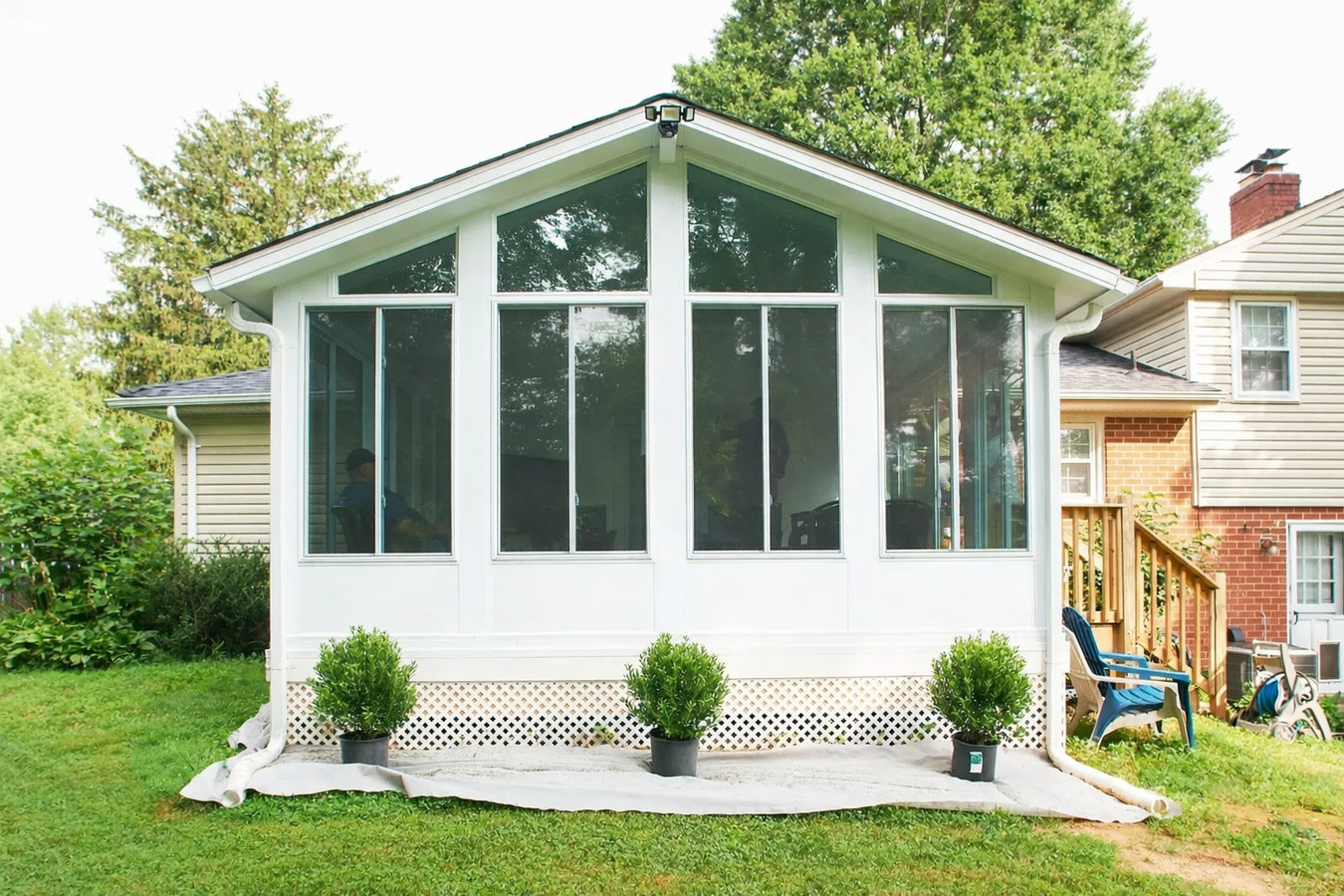
A screened porch sits empty most of the year in Florida. A four season sunroom gives you the same light and backyard connection - with insulation, climate control, and impact-rated glass built for Daytona Beach's heat, humidity, and storm season.
four seasons sunrooms in Daytona Beach are fully insulated, permitted room additions connected to your home's heating and cooling system - most projects take eight to fourteen weeks from contract to completion, and every build must include impact-resistant glass or an approved shutter system under Volusia County's coastal wind zone requirements.
The key difference between a four-season room and a basic three-season sunroom is what happens in July. A three-season room without insulation or climate control becomes unusable in a Daytona Beach summer. A four-season room with the right glass, proper insulation in the walls and roof, and cooling tied into your existing system stays comfortable no matter what the heat index says outside.
Because it is a permanent addition with electrical and HVAC connections, a four season sunroom also adds real, documented square footage to your home - which matters when you refinance or sell. The permit and final inspection sign-off are part of every project we complete.
If the heat and humidity make your screened porch unusable during Daytona Beach's hottest months, that is the clearest sign a four-season room would change how you actually live in your home. You'd have the same backyard light and view with none of the heat or bugs.
Many Daytona Beach homeowners use four-season sunrooms as a home office, a reading room, a place for plants, or a casual gathering space. If you're wishing you had one more finished room, a sunroom is often the most practical path to getting it without gutting what you already have.
If you have an existing patio slab in good condition, a contractor can often build on top of it rather than pouring a new foundation - reducing cost and construction time. Daytona Beach has many homes from the 1960s through 1980s with slabs that are still structurally sound.
Many older Daytona Beach homes were built with smaller windows and less open floor plans. A four-season sunroom adds a wall of glass that floods your home with natural light - and because it connects to your main living area, that brightness carries into adjacent rooms all day.
A four season sunroom is built as a permanent addition - it ties into your home's existing structure, electrical, and HVAC so it feels like any other room inside your house. The glass does most of the comfort work: in Daytona Beach's intense sun, low-emissivity glass blocks heat while letting in light, and impact-resistant glazing is required for most coastal addresses in Volusia County. We also evaluate whether your existing slab is usable as a foundation, which can reduce cost and timeline.
If you are comparing a four-season room against what you might have now, the difference comes down to usability. A three-season sunroom gives you spring and fall. A four-season room gives you every month. And if you are looking at broader enclosed living space options, our all season rooms are another option worth comparing for your specific property and goals.
Ideal when an existing concrete patio or slab can serve as the foundation - reduces cost and often shortens the build timeline.
Best for homes without a usable existing slab, or where soil conditions require a custom footing approach for long-term stability.
Designed to connect directly to your home's existing heating and cooling system for consistent comfort even on Daytona Beach's hottest July afternoons.
Daytona Beach averages over 230 sunny days a year and sits in a coastal wind zone that requires impact-resistant glass or shutter systems on any new room addition. Those two facts shape every design decision. The glass type, the cooling capacity, and the room's orientation on your property all have to account for Florida's heat and storm season in a way that a contractor from a drier or inland market might not think about automatically. A south- or west-facing room in Daytona Beach's afternoon sun needs meaningfully more cooling capacity than a north-facing one.
Much of Daytona Beach's housing stock was built from the 1950s through the 1980s using concrete block construction, and older CBS homes sometimes need wall reinforcement before a permanent addition can be attached. Homeowners in Port Orange and Ormond Beach face similar considerations - the coastal wind zone and permit requirements extend well beyond the city limits of Daytona Beach itself.
Salt air from the Atlantic also accelerates corrosion on metal frames and fasteners faster than most homeowners expect. We select materials specifically for Daytona Beach's coastal conditions - frames, seals, and fasteners that hold up over years rather than deteriorating quietly. That choice is not visible on installation day, but it determines how the room looks and performs five years later.
We ask about your home, what you want from the room, and roughly where you are thinking of adding it. This is enough for us to know if a site visit makes sense. We respond within 1 business day. No commitment required.
We visit your property, look at your existing slab, exterior wall, electrical panel, and HVAC setup, and note the room's orientation. In Daytona Beach, a west-facing room needs different cooling than a north-facing one. We give you a written estimate that breaks down exactly what is included.
Once you sign a contract, we submit the permit to the City of Daytona Beach Building and Code Administration. Approval takes two to six weeks - nothing structural can begin until the permit clears. Use this time to finalize flooring choices and HVAC preferences.
Foundation or slab work first, then framing, roofing, windows, and interior finishing. A city inspector verifies everything at the end. We walk you through the finished room and hand you all permit and inspection documentation to keep with your home records.
We respond within 1 business day. No sales pressure - just a free on-site assessment and a written estimate you can count on before you commit to anything.
(386) 278-1903Daytona Beach homes vary - older CBS construction, different slab conditions, different electrical setups. We visit your property before quoting a price. That is how the number you agree to at the start is the number you pay at the end.
Daytona Beach's wind zone designation means impact-resistant glass is required for most room additions here. We build to those standards as part of every permitted project - which also means your sunroom is not a weak point in your home when a storm approaches.
Frames, fasteners, and seals chosen for coastal conditions hold up over years in ways that inland materials do not. The Atlantic coast salt air works on your home every day - we build for that reality from the start.
A permitted, inspected four-season room adds documented square footage to your home. An unpermitted room does the opposite - it can complicate a sale or trigger required removal. Every project we complete is fully permitted through the city or county with records you keep.
Florida requires that contractors performing structural work hold a license issued by the Florida Department of Business and Professional Regulation. You can verify any contractor's license on their site in about two minutes - and we encourage you to check. Glass used in Florida coastal construction must also meet state approval standards, which you can verify through the Florida Building Commission.
A more affordable option for homeowners who want outdoor connection during Daytona Beach's mild spring and fall months.
Learn MoreVersatile enclosed room additions designed to handle every Florida season with comfort and durability.
Learn MorePermit timelines mean the sooner you start, the sooner you're sitting in your new sunroom - call today for a free on-site estimate.