
Loading...
Serving Daytona Beach, FL and surrounding areas. (386) 278-1903
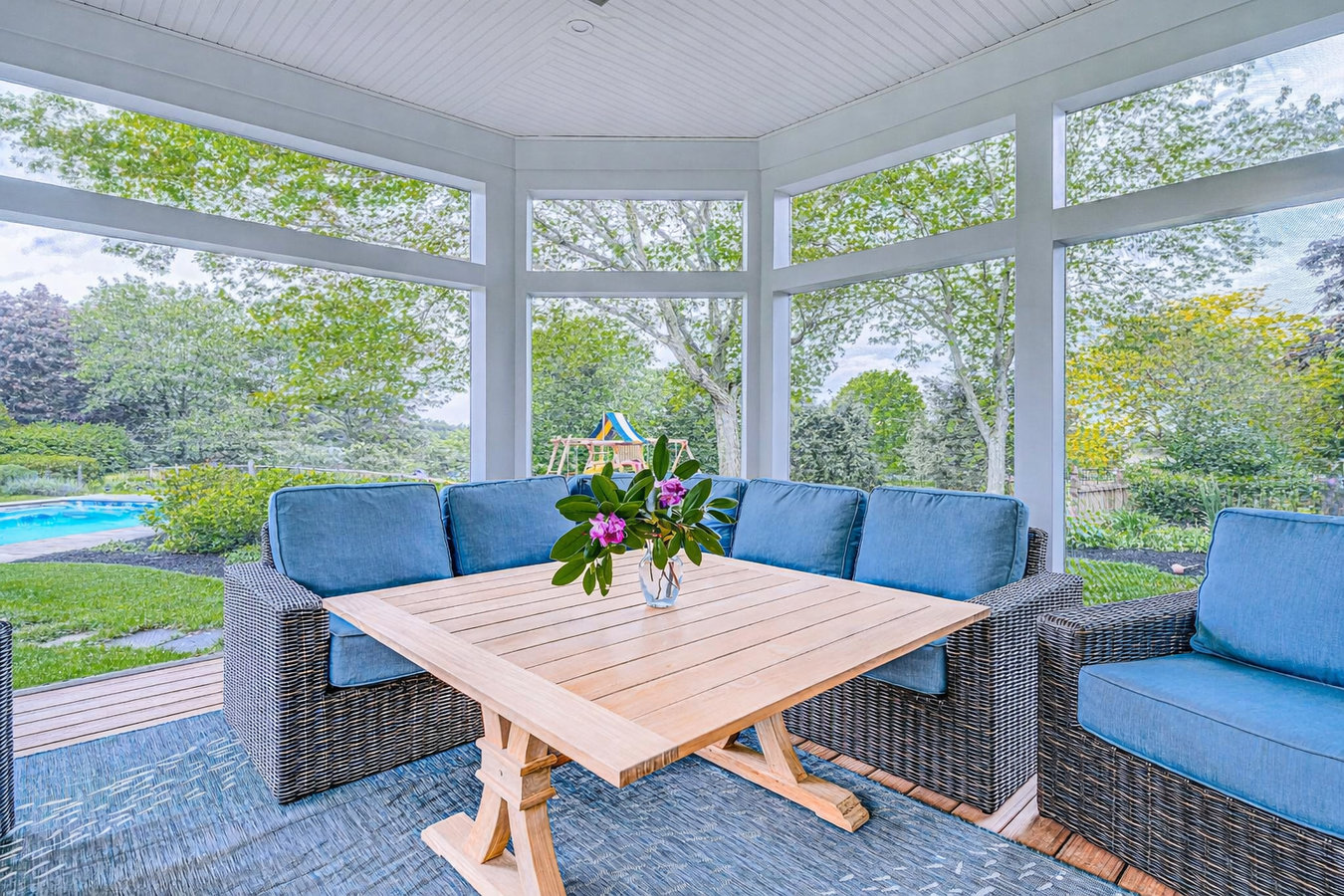
Florida heat and afternoon storms keeping you off your patio? A new sunroom gives you the light and the view without the bugs, the heat index, or the summer downpours.
Sunroom additions in Daytona Beach are permitted room additions attached to your existing home, most projects run four to twelve weeks from permit approval to completion, and every job must meet Florida wind-resistance requirements. A sunroom sits between your indoor living space and your backyard - giving you a room that feels like outside but acts like inside.
Whether you are looking at a budget-friendly three-season setup or a fully insulated four-season sunroom connected to your home's HVAC system, the right choice depends on how you plan to use the room and your climate tolerance for Daytona Beach's hot, humid summers. Most homeowners who want year-round use choose a four-season room.
Daytona Beach's sandy soil, salt air, and Volusia County permit requirements make this a different project than it would be in a drier inland state. A contractor who has worked here knows those differences before the first measurement is taken.
If Florida mosquitoes, afternoon heat, or summer storms keep you indoors, your outdoor space is not working for you. A sunroom gives you that connection to your backyard on every day of the year - not just the three comfortable weekends when the weather cooperates.
Torn screens, corroding frames, or soft spots in the floor are signs that a repair will not solve the underlying problem. Upgrading to a fully enclosed sunroom at that point usually makes more financial sense than patching a structure that will need more repairs in a few years.
If your family has grown, you are working from home, or you just need a quiet space that is not a bedroom, a sunroom is one of the most cost-effective ways to add square footage. It can serve as a home office, reading room, playroom, or casual dining space without a full interior renovation.
If every tropical storm leaves your patio furniture soaked and your outdoor cushions moldy, a sunroom solves that permanently. In Daytona Beach, where heavy afternoon downpours run from June through November, having a protected outdoor-feeling space is a practical upgrade, not a luxury.
Every sunroom addition project starts with the same question: how do you want to use the room? A three-season room is the most affordable path and works well if you mainly want bug protection and shade during Daytona Beach's mild spring and fall months. A four-season sunroom with full insulation and climate control is the right answer if you want to sit in the room comfortably in July. And if your home already has an existing slab or patio in good shape, that foundation can often be used, which reduces both cost and construction time.
Beyond the room type, the construction approach matters just as much. Florida's wind-resistance requirements mean the glass panels, framing, and roof connections must meet specific standards - not optional, and not something to cut corners on. We also look at your soil conditions, your existing wall construction, and your home's electrical and HVAC setup before giving you a price, so the number you agree to at the start is the number you pay at the end.
Best for homeowners who want bug protection and shade in mild weather without the cost of full climate control.
Best for homeowners who want a room they can use comfortably every month of the year, including Daytona Beach's hottest summers.
Best for homeowners with an existing slab in good condition who want to enclose the space at a lower cost and faster timeline.
Daytona Beach's coastal location means every sunroom addition has to contend with factors that inland Florida builders may not think about. Salt air corrodes metal frames, fasteners, and window seals faster than most homeowners expect. The sandy soil in many neighborhoods requires deeper footings than a standard slab approach would use. And Florida's wind requirements mean the glass, framing, and every connection point where the sunroom meets your home must meet hurricane-zone standards - which adds cost but also adds real protection when a storm comes through.
Neighborhoods like Port Orange and Ormond Beach sit just outside city limits but still fall under similar permit and construction requirements. Whether your home is near the Daytona International Speedway, out in the quieter residential streets west of US-1, or right on the beachside, the permitting jurisdiction matters. The City of Daytona Beach and Volusia County each have their own building departments, and a local contractor knows which office handles your address.
Daytona Beach has a large share of homes built in the 1950s through the 1980s, many of them concrete block construction. Attaching a sunroom to a CBS home requires a different approach than wood-frame construction. If you are in an HOA community like LPGA International or Pelican Bay, your contractor also needs to know that HOA design approval runs separately from the county building permit - and both are required before work begins.
We ask a few basic questions about your home, what you want to use the room for, and whether you have an HOA. We respond within 1 business day. No commitment required - just enough to make the site visit useful.
We visit your property, walk the space with you, and look at your existing foundation, soil conditions, exterior wall, and yard drainage. This is how we give you a price that does not change mid-project.
You get a written scope of work and a fixed price. Once you approve, we submit the permit application to the City of Daytona Beach or Volusia County. Permit review typically takes two to six weeks - we cannot begin construction until it clears.
Foundation work first, then framing, windows, roofing, and interior finishing. A city inspector visits at the end to confirm everything meets code. We walk you through the finished room and hand you all permit documentation.
We respond within 1 business day - no obligation, no sales pressure. After you submit, someone from our office will call to schedule a free on-site estimate at your home.
(386) 278-1903We visit your property and look at your soil, your existing wall construction, and your HVAC setup before we quote you a number. That upfront work is what keeps the final price from changing mid-project.
Every sunroom addition we build in Daytona Beach is fully permitted through the City of Daytona Beach or Volusia County. The permit documentation stays with your home records and protects you at sale time.
Salt air, high humidity, and hurricane requirements shape every material choice - from the frame type to the fasteners to the window seals. A sunroom built for coastal conditions holds up differently than one designed for a drier market.
You can call us, talk through your project, and have us out to your property for a full assessment without committing to anything. The estimate is free and comes with a written scope so you know exactly what is included.
Florida's building requirements and Daytona Beach's specific soil and climate conditions are not obstacles - they are the reason a locally experienced contractor matters. The National Association of Home Builders recommends getting at least three written quotes from licensed contractors before committing - and we stand behind our quote being one you can rely on.
Step up to a fully insulated, climate-controlled room you can use comfortably any month of the year.
Learn MoreFull ground-up sunroom construction for homeowners who want a custom-built room designed around their property.
Learn MorePermit timelines in Daytona Beach mean earlier is always better - call today for a free on-site estimate and get your project on the schedule.