Loading...
Serving Daytona Beach, FL and surrounding areas. (386) 278-1903
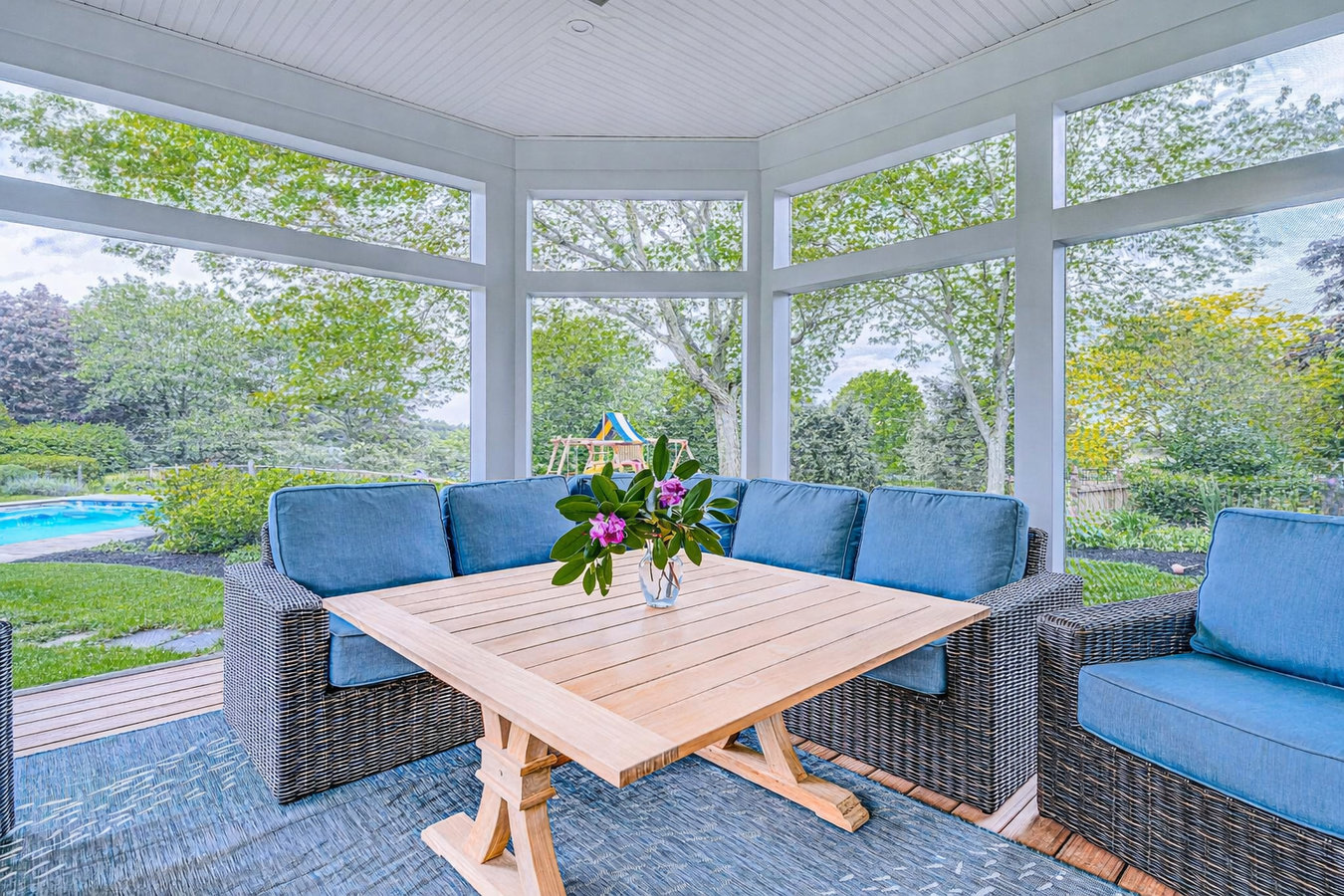
TrueView Daytona Beach Sunrooms is the local sunroom contractor Daytona Beach homeowners call for sunroom additions, four season rooms, and patio enclosures - built to Florida code and ready for storm season.
Many Daytona Beach homes built in the 1970s through 1990s have a small sliding door as the only connection between the living area and the backyard. A sunroom addition opens that wall up and gives you a full, enclosed room that lets in Florida light while keeping out the heat, bugs, and afternoon storms.
Daytona Beach summers push the heat index well above 100 degrees, and a room that is not insulated will be unusable from June through September. A fully climate-controlled four season sunroom stays comfortable every day of the year, making it genuinely functional space rather than a seasonal add-on.
Open patios in Daytona Beach take a beating from UV exposure, salt air near the coast, and the heavy afternoon thunderstorms that roll through from June through September. Enclosing your patio protects both the structure and the furniture inside it, and gives you a sheltered space you can actually use after a storm passes.
Mosquitoes and no-see-ums are a year-round fact of life in Daytona Beach, and a screened room gives you outdoor airflow without the insects. This is the right choice for homeowners who want to enjoy the breeze off the Halifax River or a backyard view without a full enclosure.
For Daytona Beach homeowners who mostly want to use their outdoor room during the cooler months from October through May, a three season room is a more affordable starting point than a fully insulated build. It still protects you from bugs, rain, and wind, just without the full HVAC connection.
Daytona Beach's humidity and salt air work on older sunroom seals and framing every single day. If your existing sunroom has drafts, mold along the window frames, or screens that no longer keep weather out, a remodel can restore the room without starting from scratch.
Most of Daytona Beach's housing stock was built between the 1950s and 1980s using concrete block construction - a building method that holds up well against hurricanes but develops its own problems over time, including moisture penetration through stucco cracks and corroded fasteners near the coast. Any sunroom addition attached to one of these homes needs to account for how the existing block wall is performing, not just how the new room is designed. A contractor who learned the trade in a drier, wood-frame market will miss these details.
Florida's building code also imposes wind-resistance requirements on all attached structures in this region, which affects material selection, framing connections, and glass specifications for every sunroom we build. The Florida Building Commission sets these standards, and Volusia County enforces them through inspections at every stage. Homeowners near the beachside barrier island face additional considerations from salt air exposure that accelerates wear on framing, caulk, and metal fasteners - meaning the materials used on a beachside project need to hold up to conditions that inland jobs simply do not face.
Our crew works throughout Daytona Beach regularly, and we understand the local conditions that affect sunroom contractor work here. We pull permits through both the City of Daytona Beach Development Services department and Volusia County Building and Zoning regularly, depending on whether a property sits within city limits or in the unincorporated county. That matters because the permitting office, the application process, and review timelines are different between the two jurisdictions, and choosing the wrong one can delay a project by weeks.
We know the neighborhoods well - from the older concrete block homes in Midtown and the streets west of US-1, to the beachside properties near the Boardwalk where salt air is a daily factor, to the planned communities around LPGA International and Pelican Bay where HOA approval runs parallel to the permit process. Daytona Beach Shores sits just south along the barrier island and has its own mix of condo and single-family properties. We also serve homeowners in nearby Holly Hill just to the north, where the housing stock and permitting requirements are similar but distinct from Daytona's.
The Daytona International Speedway is the city's defining landmark, and we have worked on homes throughout the surrounding neighborhoods on both sides of US-1. Whether your home is near the Speedway corridor or close to the Halifax River waterfront, the foundation, wall construction, and storm exposure can vary significantly - and we account for all of it before we put together a proposal.
We respond to every inquiry within one business day. A brief phone call covers what you want to use the room for, a rough size, and whether your neighborhood has an HOA - so we show up with useful ideas, not a generic pitch.
We come to your home, take measurements, and assess the soil, existing wall condition, and drainage - all the factors that affect cost in Daytona Beach specifically. There is no charge for this visit, and we will give you a written, fixed-price proposal before any work begins.
Once you approve the design, we file the permit with the correct jurisdiction - City of Daytona Beach or Volusia County. Permit review typically takes two to six weeks; we handle all paperwork and follow up with the building department on your behalf.
Most sunroom builds in Daytona Beach take four to twelve weeks from permit approval to completion, depending on size and complexity. When the work is done, we walk you through the finished room and hand over all permit and inspection records.
No pressure, no obligation. We will come to your home in Daytona Beach, FL, walk the space with you, and give you a written estimate - free of charge.
(386) 278-1903Daytona Beach is a city of about 69,000 residents on Florida's northeast Atlantic coast, anchored by the Daytona International Speedway and the wide, hard-packed beach that runs along the Atlantic. The city is the commercial and employment center of Volusia County, with major institutions including Halifax Health and Embry-Riddle Aeronautical University providing steady year-round employment alongside the tourism and hospitality industries that swell the population during Bike Week and Speedweeks each spring. The housing stock is a wide mix - concrete block ranch homes from the 1950s through 1980s dominate the inland neighborhoods, while the beachside barrier island has a higher concentration of condos, rental units, and older vacation properties.
Distinct neighborhoods give Daytona Beach a varied character: the Midtown area west of US-1, the planned communities near LPGA International on the city's north side, the quieter residential streets between International Speedway Boulevard and Beville Road, and the denser beachside strip along Atlantic Avenue near the Boardwalk and Main Street Pier. Many homeowners have lived in the city for decades and have properties that reflect 40 or 50 years of Florida wear. South of the city limits, communities like South Daytona and Port Orange share much of the same housing era and building style, and we serve homeowners across all of them.
We serve Daytona Beach homeowners year-round. Call today or submit the contact form - we will be back in touch within one business day.